Reading a source · Epigraphy
What does the Zarzma inscription tell us?
Above a doorway at Zarzma Monastery, a stone slab bears a cross carved in relief. Ten lines of Georgian script survive to the left of the cross. The right side is damaged. Ivane, son of Sula, opens by telling us about the small chapel he built. A few words later, he is remembering a military campaign.
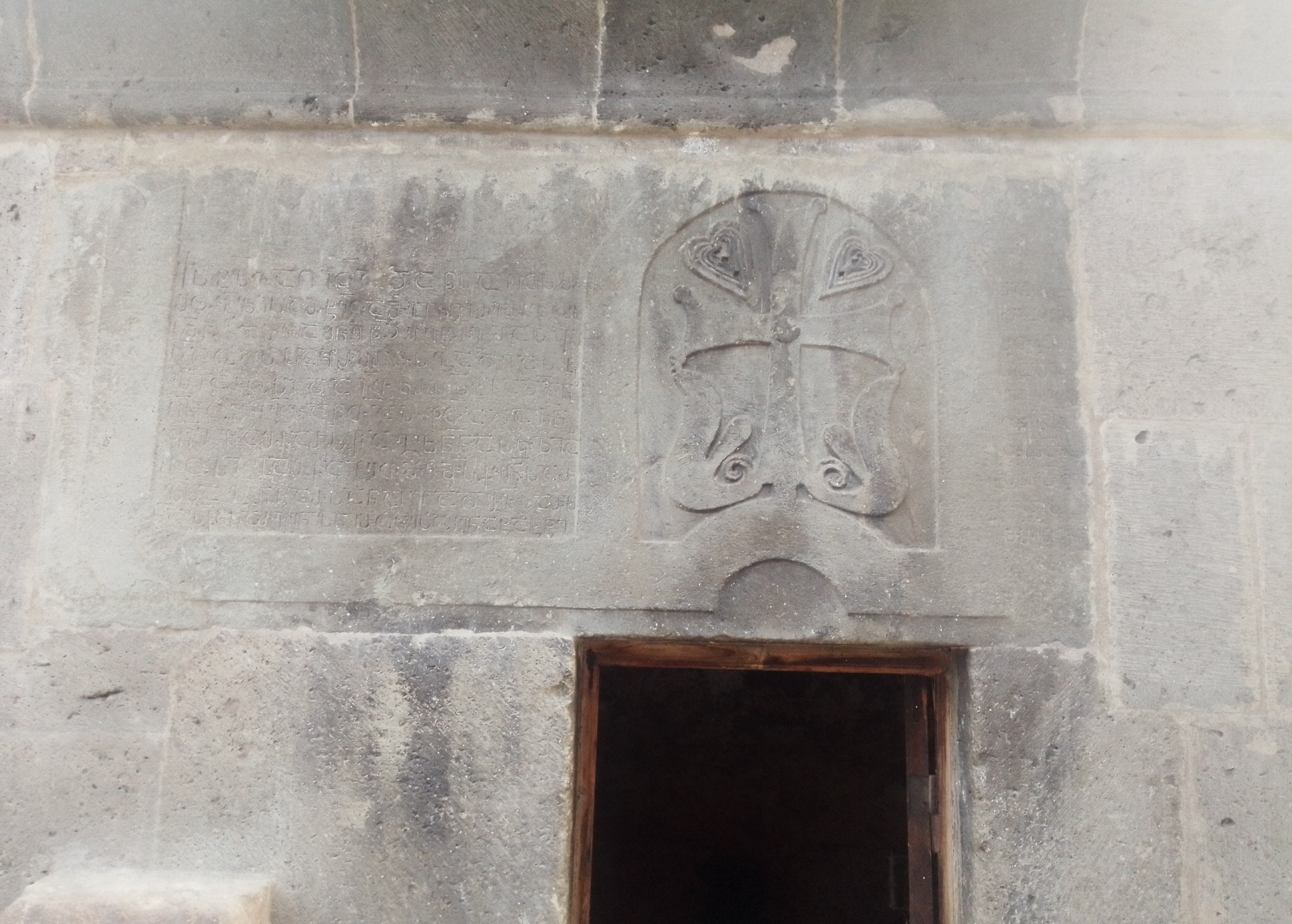
Ivane’s words
These two extracts follow the expanded reading in the monograph. Georgian letters are printed in modern Mkhedruli script in place of the stone’s Asomtavruli. Abbreviations have been expanded and punctuation supplied. The bracketed ellipses below mark words omitted from these quotations.
[…] მე, ივანე, ძემან სულასმან, აღვაშენე წმიდაჲ ეგუტერი. […]
“[…] I, Ivane, son of Sula, built this holy chapel. […]”
[…] დავით კურაპალატი — ადიდენ ღმერთმან — უშუელა წმიდათა მეფეთა და ჩუენ ყოველნი ლაშქარს წარგუავლინნა. სკლიაროსი გავაქციეთ. […]
“[…] David the kouropalates — may God exalt him — came to the aid of the holy kings and sent all of us on campaign. We put Skleros to flight. […]”
Notice the change from “I built” to “we put Skleros to flight”. Ivane claims the building of the chapel for himself. When he recalls the victory, he places himself among the men whom David sent to fight.
What the stone records
Ivane names David by his court title, kouropalates. The “holy kings” are the rulers David helped. In this setting they are understood to be the Byzantine emperors Basil II and Constantine VIII. Scholars date the inscription to about 979–980 from the revolt it names and the forms of its letters. The Epigraphic Corpus of Georgia assigns it to 980.
A personal name matters here. Ivane identifies himself as Sula’s son. Identifying him with John Tornike would require further evidence.
From Zarzma to the question of Prester John
In 1145 Otto of Freising heard about a priest and king in the East and later recorded the story in his chronicle. By then the Zarzma inscription was more than a century and a half old. In my monograph I ask whether the lives of David of Tao, John Tornike and John the Iberian gradually became the story of a single figure. Ivane’s words give that inquiry a starting point. David’s aid was commemorated in Georgia in the voice of a participant in the campaign. How such a memory might have reached the Latin West remains an open question.